What Makes Wire Reinforcement Important
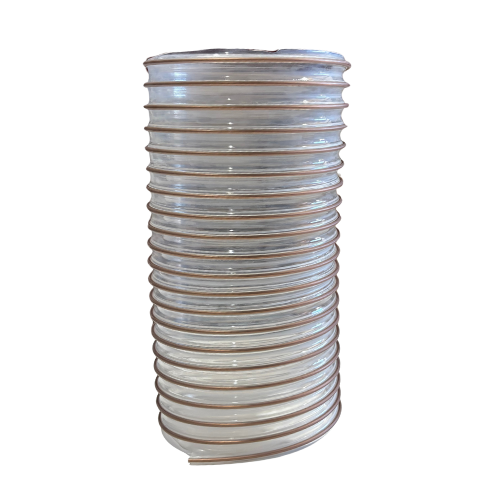
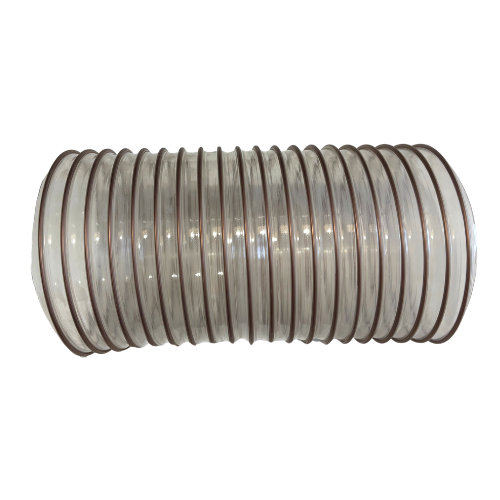
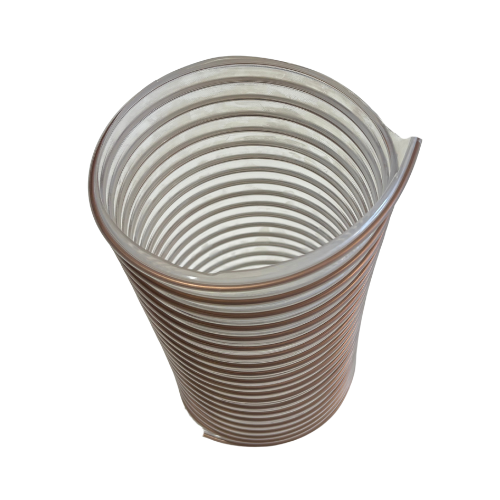
Reinforced polyurethane tubing is built for applications where standard flexible tubing may collapse, flatten, or wear out too quickly. The wire helix helps the tubing hold its shape across longer runs and under constant movement. Added support is invaluable for screening and conveying systems where material flow depends on a consistent open path between connection points.
Compared to non-reinforced tubing, wire-reinforced construction offers better structural stability when the line is exposed to vibration, vacuum, or shifting equipment motion. In positive- and negative-pressure setups, the tubing is better able to resist wall collapse while still providing the flexibility needed for installation, making it a common choice for demanding environments.
The polyurethane material also adds abrasion resistance, tear strength, and long service life in high-wear conditions. For operations that need durable tubing solutions over medium to long spans, this combination of flexibility and reinforcement supports reliable performance. It is especially useful when movement between connected machines creates stress that lighter tubing may not handle well.
Installation Best Practices
Proper installation helps this reinforced polyurethane tubing perform as intended. Start by measuring the required run carefully and cutting the tubing to the needed length. A clean, straight cut supports better contact at the connection point, reducing gaps that may affect performance.
Once cut, attach the tubing to the inlet or outspout using the appropriate connector clamp hardware. Because this tubing is more rigid than some other flexible tubing products, clamp selection and fit are crucial. The tubing should be seated fully and secured evenly so it stays in place during movement and vibration; avoid forcing the tubing onto undersized or oversized openings, as that can create stress at the connection.
During installation, route the tubing away from sharp edges or surfaces that may create unnecessary wear over time. Even with strong abrasion resistance, periodic inspection is still a good maintenance step. Check for clamp looseness, wall wear, or damage near high-motion areas.
How It Compares
This product is more rigid in the diameter/circumference so precise fit to the attachment is recommended as it will not stretch over large openings and is difficult to compress to fit smaller openings.
Choosing the Right Tubing Material for Your Application
Selecting the right tubing starts with assessing the conditions of the application. Polyurethane tubing is often chosen when flexibility, wear resistance, and long-term durability matter most. When wire reinforcement is added, it becomes a stronger option for systems that need more support than standard clear flex tubing can provide.
For example, clear flex can work in lighter-duty applications, but it may not provide the same level of shape retention over longer distances or under pressure changes. Silicone tubing can be useful in certain temperature-sensitive environments, although it may not offer the same abrasion resistance as reinforced polyurethane. Gum rubber may work in some transfer setups, but it is not always the best fit where visible wear, vibration, or extended movement are part of daily operation.
Reinforced polyurethane tubing is a strong fit for screening equipment and other industrial tubing applications where the line must stay open during vibration and motion. It is also a good option for tubing for fluid transfer or material movement where operators need a more durable alternative to lighter tubing materials. Since it is more rigid in the diameter and circumference, a precise fit at the connection point is essential; it will not stretch easily over larger openings or compress as readily onto smaller ones. For a more detailed breakdown of tubing materials and performance considerations, explore our grading sheet.